


Contents
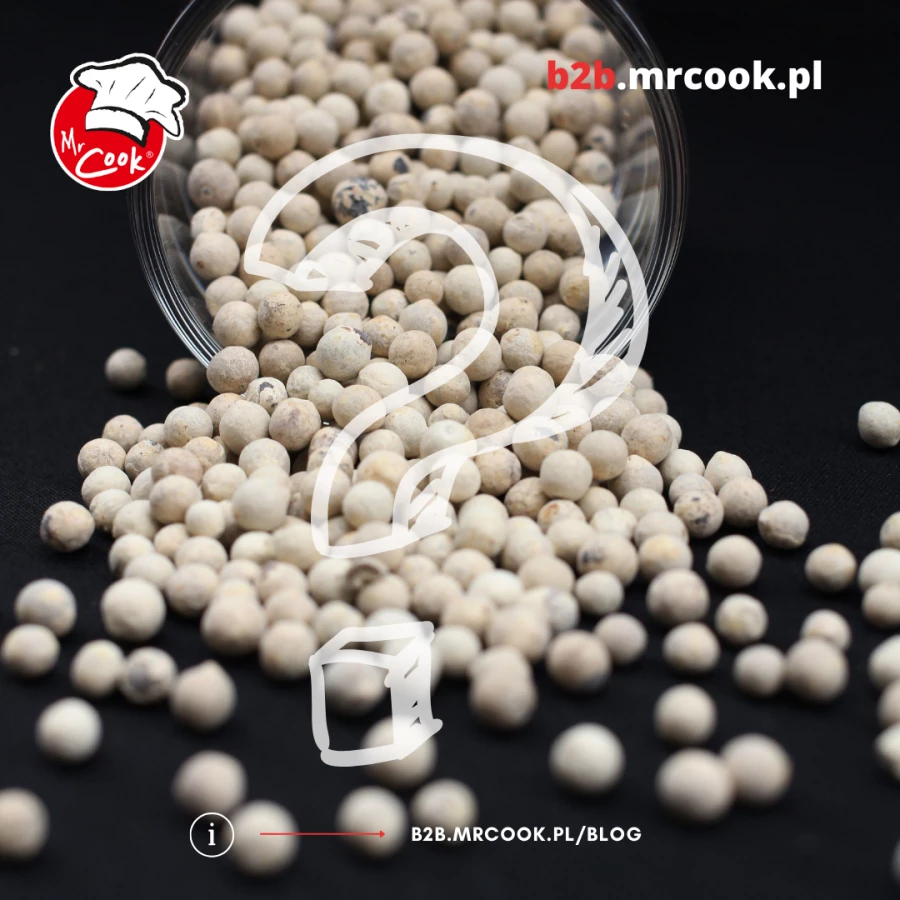
Less intense in flavour than its black counterpart, white pepper is often chosen for seasoning delicate dishes, where its more subtle flavour and lack of visible black specks are desirable. In Poland, white pepper is particularly prized and often used in the following dishes:
-
Cream soups - such as cream of mushroom, cream of leek or cream of white vegetables, where white pepper delicately enhances the flavour without disturbing the uniform colour of the dish.
-
Sauces - especially white sauces based on milk or cream, such as béchamel sauce, to which white pepper adds depth of flavour without altering their colour.
-
Fish and seafood dishes - white pepper is used to season delicate fish and seafood as it does not overpower their natural flavour.
-
Poultry dishes - in chicken or turkey dishes where you want to keep the colour light and the flavour delicate.
-
Potato purée - white pepper is added to potatopurée to enhance the flavour without introducing black spots that could disrupt the visual purity of the dish.
Why use white pepper?
White pepper is an excellent choice for those who appreciate subtlety and aesthetics in their dishes. Here are a few reasons why you should use it:
-
More subtle flavour - White pepper offers a more subdued but equally complex peppery flavour that does not overwhelm other flavours in delicate dishes.
-
Aesthetically pleasing - The lack of black specks makes it an ideal choice for light sauces and creams, where the appearance of the dish is just as important as the flavour.
-
Tradition and modernity - White pepper is used both in traditional Polish cuisine and in modern, experimental recipes, demonstrating its versatility and adaptability to different culinary styles.
Choosing white pepper as a seasoning for specific dishes can significantly affect their taste, aroma and presentation, making each dish not only tasty, but also visually appealing. Its use in Polish cuisine is proof of the importance of matching the right seasoning to the character of the dish.