The role of pepper in cooking and the variety of pepper varieties
Pepper has played an extremely important role in cooking for centuries. Its presence in cuisines all over the world is no coincidence - it has the power to enhance flavours, give dishes a distinctive aroma and add a spicy taste. But have you ever wondered why pepper is so popular? Have you wondered about the diversity of this spice, which goes far beyond the classic black and white pepper?
-
The role of pepper in cooking
The first references to pepper date back to antiquity. It was not only a culinary ingredient, but also a medicine and currency. Traders travelled hundreds of kilometres to obtain these precious grains. In ancient Rome, pepper had such great value that it was often used to pay rent and taxes. In medieval Europe, pepper symbolised wealth and luxury, and in India it has long been used in traditional Ayurvedic medicine.
The use of pepper in cooking is not only to improve the flavour and aroma of a dish, it is worth remembering that traditional medicine attributes health properties to it. according to centuries of observations, it helps digestion, has anti-inflammatory and anti-bacterial effects, which can even help in the fight against certain diseases. Pepper is a spice that can be added to almost any dish. It is a popular ingredient in spice blends, sausage and charcuterie products and even desserts.
-
Variety of pepper varieties
Although for many pepper is only associated with black grains in a grinder on the table, this is only the tip of the iceberg of this fascinating spice. In fact, there are many varieties of pepper, each with its own unique flavour and aromatic properties.
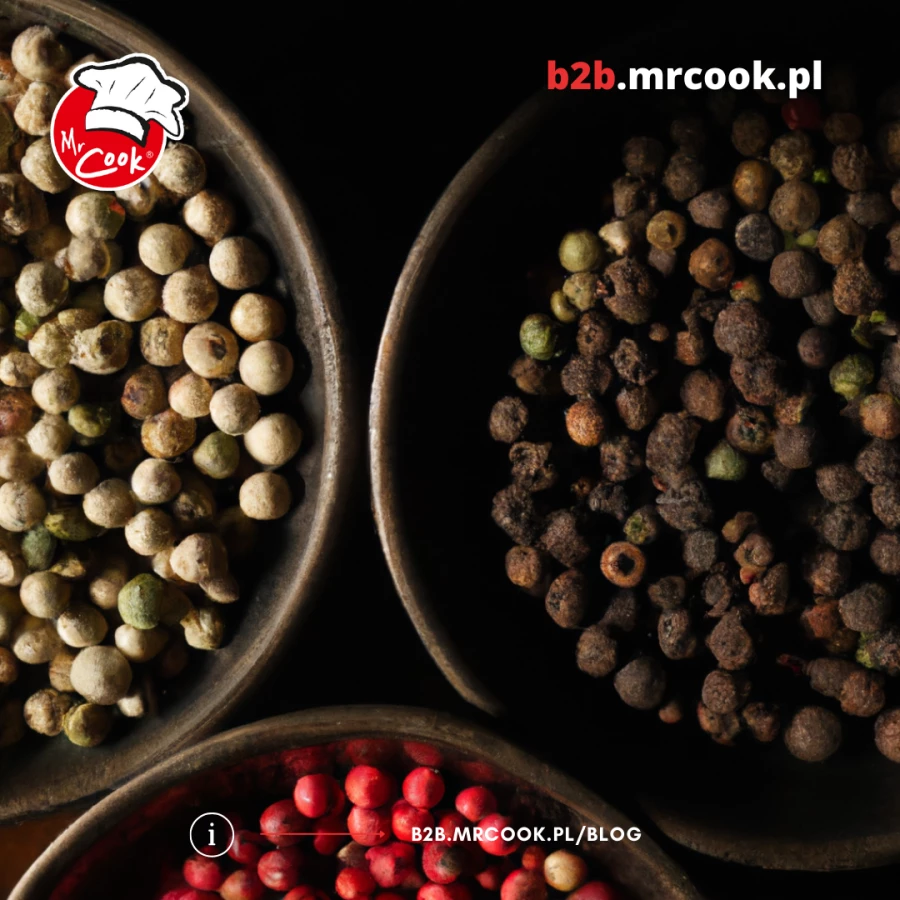
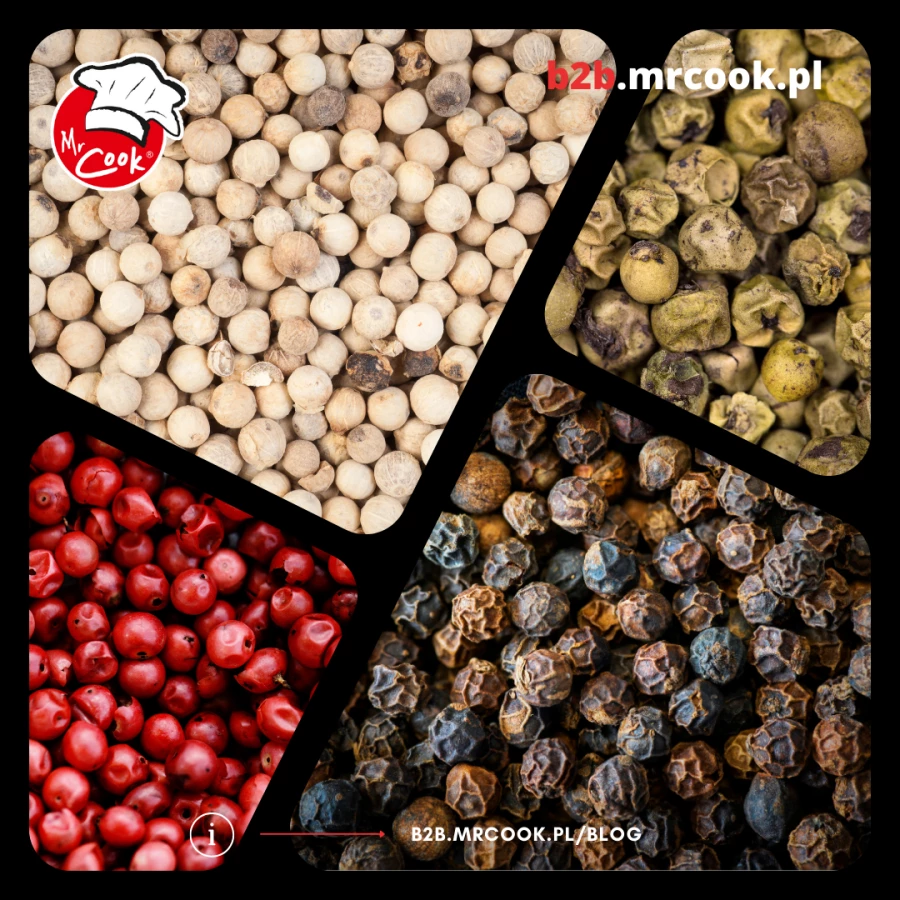
The black pepper we know and love is the beginning of the journey through the world of pepper as a spice. White pepper and green pepper are varieties that come from the same plant as black pepper (piper nigrum). Red (pink) pepper - is another colour of this culinary treasure. Some exotic varieties, such as wild pepper from Madagascar or Sichuan pepper, many of us may not even have heard of. Each offers a slightly different flavour and aromatic note. Let's learn more about them to understand how they differ.
In the following sections of this article, we will take a closer look at the different pepper varieties, their quality, production process and use in cooking. We will not only cover the pure pepper varieties, but also explore the world of spice blends and herbs that, although they carry the name 'pepper', actually open up a whole new spectrum of flavours and aromas.Get ready for a journey through the world of flavours that will change your approach to this ubiquitous spice.
Read also: Ingredients for gingerbread spice
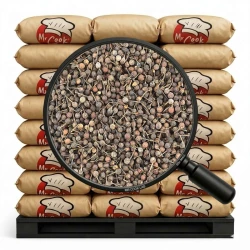
Black pepper - what is it and how to choose the best one?
Black pepper, one of the most popular spices, hides a rich history and variety of flavours.Its journey begins in the tropical plantations of Asia and South America, as a warm and humid climate is necessary for its cultivation. Let's take a closer look at the production process of black pepper, which is the most spicy variety.
-
What plant is black pepper extracted from?
Black pepper is the fruit of Piper nigrum, a perennial climbing vine in the pepper family (Latin Piperaceae). The plant is originally native to the Malabar region of India, and its fruit was one of the first known and valued spices in history. This woody climber can reach heights of up to 10 metres, thanks to its adventitious roots. These form the support and are a source of nutrients.
-
Where is black pepper grown?
Although black pepper has its roots in India, it is now cultivated in many countries with tropical climates due to its popularity and importance in trade. In Europe, it is most commonly imported from Vietnam, Brazil and, of course, India. The climate in Poland and other European countries is not conducive to pepper cultivation, hence it is not grown on our continent.
-
How does black pepper grow?
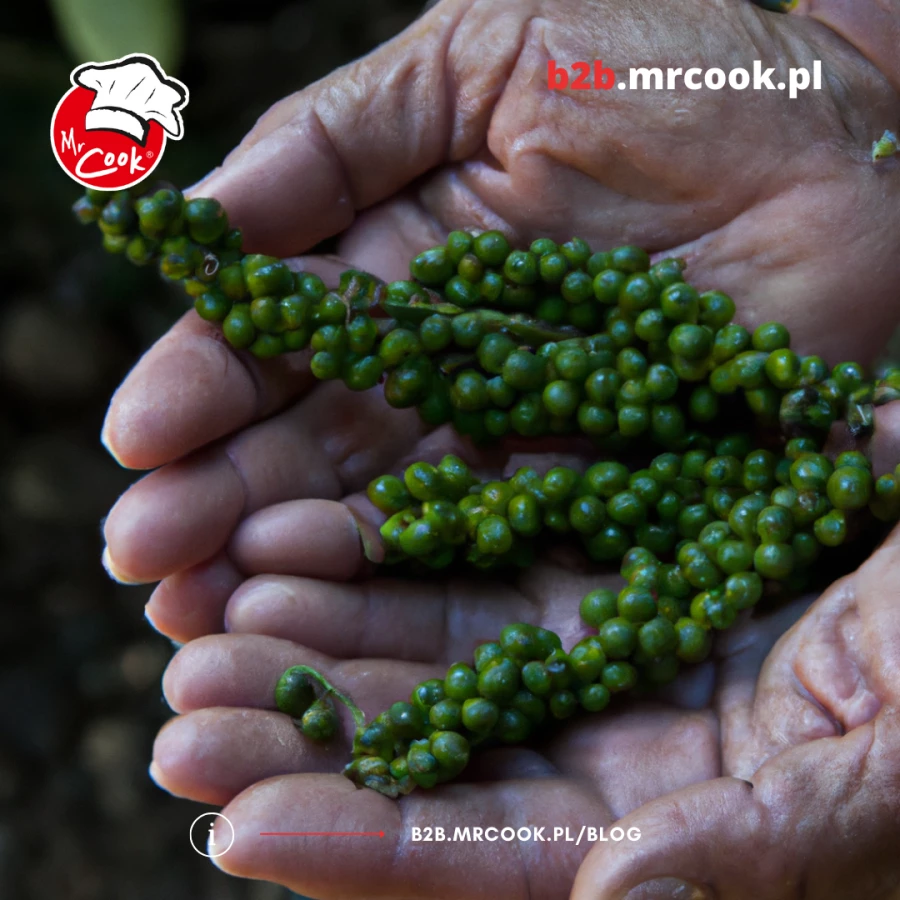
The Piper nigrum vine is characterised by its green leaves and fruits arranged in dense clusters, resembling grapes. When the fruit reaches a yellow-red colour, it signifies its maturity. Nevertheless, green fruits are used for black pepper. The appearance of 1-2 yellow or red fruits in a bunch is a signal for growers to start harvesting.
-
When is the pepper harvest?
The pepper harvest varies from region to region around the world, as the crop is closely linked to the local climate and weather conditions. Here are some examples of when the pepper harvest takes place in different countries:
- India: the main pepper harvest season in India is usually between December and January.
- Vietnam: In Vietnam, the leading pepper-producing country in the world, the harvest usually starts in February and lasts until the end of March.
- Brazil: In Brazil, the pepper harvest can take place at various times of the year, usually between December and March.
In Poland, black pepper from Vietnam and Brazil is most commonly available.
Read also: Star anise: Discover the secrets of culinary use
-
How is black pepper produced?
We already know when the black peppercorns are harvested. What other processes need to take place before the ever-popular black peppercorns can be found on our tables?
-
Threshing
The process in which individual fruits are separated from the harvested bunches. Threshing used to be done by hand or with feet. Today, this process is mostly mechanised.
-
Blanching
The fruit is then blanched. Although many sources state that boiling takes place, in reality the peppercorns are immersed in hot water for about 1 minute.
-
Drying
Before becoming black peppercorns, the piper nigrum fruit undergoes a drying process. This process can take place in the sun or in industrial drying kilns. Nowadays, the latter method is the most commonly used, as it guarantees control over the parameters of the process, thanks to which producers offer reproducible quality.
-
Purification
The next stage in the production of black pepper is to clean the dried fruit of any remaining stalks, leaves and other impurities. This process is carried out using specialised equipment such as a spiral separator.
-
Packaging
The final stage is packaging of the ready-to-sell black peppercorns in 25 kg bags. These are food-grade packaging made of paper or polyethylene with a foil insert inside.
As you can see, the process of black pepper production, requires the right knowledge and labour. However, not every seed that reaches the market is of the same quality, so let us look at the parameters responsible for the quality of pepper.
-
Black pepper quality classifications
Black peppercorns in the professional market come in different quality variants. The quality of black peppercorns is determined, among other things, by the bulk density.
This determines how many grams of black peppercorns fit into 1 litre of volume. The Codex Alimentarius International Food Standard for black peppercorns indicates 3 quality categories. In the table below, I have presented 3 selected parameters that determine which quality class black peppercorns belong to:
| Black pepper |
Bulk density (Min.) |
Piperine content (Min.) |
Essential oils (Min.) |
| Class I |
550 g/l |
3.5% |
2.0 ml/100g |
| Class II |
500 g/l |
3.0% |
1.5 ml/100g |
| Class III |
400 g/l |
2.0% |
1.0 ml/100g |
It is also useful to know the requirements set by the European Spice Association (ESA) in the Quality Minima Document rev. 5 for black pepper:
-
Ash content: maximum 7.0% on a dry weight basis
-
Acid-insoluble ash: maximum 1.5% in dry matter
-
Moisture content: maximum 12%
-
Essential oils (V/O): minimum 2.0 ml/100g
In the data presented, there is a distinction between piperine content and essential oil content (V/O), which are two different indicators of pepper quality.
-
Piperine is the main active alkaloid compound in pepper, which is responsible for its spiciness and characteristic peppery taste. The piperine content is an important quality parameter, as the higher the content of this ingredient, the hotter the pepper is and the more widely desired by consumers. Codex Alimentarius standards define the minimum piperine content of white pepper depending on the quality grade, which can affect the intensity of the taste experience and the value of the spice in the market.
-
Essential oils (V/O) are the volatile components that give pepper its aroma. The presence of essential oils is important not only for the aroma, but also for the overall organoleptic properties of the pepper. Therefore, the minimum content of these oils is an important parameter in determining the quality of the spice. These oils are isolated from pepper and their content is measured in millilitres per 100 grams of product.
How does the piperine content differ from the essential oil content of pepper?
Both parameters are important and play a role in assessing the quality of the pepper, but they relate to different organoleptic characteristics of the product.
-
Black pepper is a clear classic in the world of spices
Considered the 'king of spices', black pepper not only has a pungent, slightly burning flavour, but also a deep aroma that makes it one of the most widely used food additives around the world. In addition to its traditional use in cooking, black pepper has been used medicinally as an anti-flatulence agent and a stimulator of gastric secretion. Over the centuries, black pepper has spread from the tropics of Southeast Asia to the rest of the world, becoming an important part of cuisine in many cultures. In ancient times, it was so prized that it was widely traded between India and Europe, contributing to the search for new sea routes.
-
Adulteration (food fraud) in black pepper
Food adulteration, including black pepper, is a serious problem that not only affects the quality of the product, but is also a manifestation of unfair competition. In the case of black pepper, adulteration can occur both in the form of seeds and in ground form. The predominant reason for adulteration are economic factors, and I raise this issue because, in my opinion, the awareness of market players and consumers is the most effective way of combating food adulteration.
Methods of adulterating black peppercorns
For the less initiated, the practice of pepper adulteration in the form of grains may be surprising. It is true that ground spices are more susceptible to adulteration. Let's take a look at the undesirable additives that may be present in peppercorns:
-
Carica papaya fruit seeds: These seeds are visually similar to peppercorns, but can be toxic to the liver and cause health problems.
-
Waste from pepper production: Sometimes rejects, i.e. grains that for various reasons (e.g. size, colour or quality) do not qualify for sale as premium quality pepper, can be added to pepper. These may be, for example, light grains, known as 'light berries', which are less valuable.
-
Grains from other plants: such as buckwheat, millet or cereal grains, which may be coloured or thermally processed to make their appearance closer to that of peppercorns.
-
Fine stones and other mineral impurities: Although this is not deliberate adulteration, sometimes mineral impurities can be inadvertently mixed with peppercorns during the harvest or packaging process.
Methods of adulterating ground black pepper
For ground black pepper, the ease of adulteration increases. In addition to the methods cited for black peppercorns, the addition of cheap fillers is popular.
-
Starch and other fillers: corn starch is most commonly used to adulterate ground black pepper.
-
Coffee husks (coffee husk): This is waste from coffee production that does not significantly affect the taste of the pepper.
- Ingredients of similar granulation: All finely ground products cheaper than pepper that have a similar texture to pepper.
The adulteration of pepper and other spices is a serious challenge for importers and spice producers, as confirmed by the EU Food Fraud Network report on fraud in the herbs and spices sector, published on 25 January 2021. This procedure constitutes an element of unfair competition and, in extreme cases, a health risk for consumers.
In summary, to obtain black pepper, the ripe fruit is harvested and then subjected to a drying process that gives it its characteristic dark colour.
-
Tellicherry variety - the best premium quality black pepper, fact or myth?
When we talk about black pepper, it is worth mentioning one unique variety - Tellicherry. Originating from India's Malabar Coast, Tellicherry is considered one of the most aromatic and highest quality black peppers in the world. What makes it so special?
While black pepper is prized the world over, the Tellicherry Extra Bold variety is considered particularly special, and I'll explain why:
-
Grain size: Tellicherry Extra Bold is characterised by larger grains compared to standard black pepper. Larger grains often mean that the pepper has matured longer on the bush, leading to deeper flavour and aroma development.
-
Aroma: The longer maturation of Tellicherry beans on the bush translates into a more intense and complex aroma compared to standard black pepper. This intense aroma is often described as more refined and less pungent, with pronounced fruity notes.
-
Taste: Similar to the aroma, the taste of Tellicherry Extra Bold pepper is considered more complex and balanced. Although still spicy and pungent, it tends to have a richer flavour profile with softer notes.
-
Piperine and essential oil content: While the piperine content may be comparable to standard black pepper, the higher essential oil content of Tellicherry Extra Bold translates into its unique flavour and aroma.
-
Quality and selection: Tellicherry Extra Bold pepper is often selected with greater care, meaning that each seed is more uniform in shape and size, indicating a higher overall quality of the product.
In summary, the main advantage of Tellicherry Extra Bold pepper over standard black pepper lies in its larger grains, more intense aroma, complex flavour and high quality selection. These characteristics make it an exceptional choice for gourmets and culinary professionals. In my opinion, it is the best pepper for steaks.
In the following sections of this article, we will look at other forms of pepper derived from the same plant, Piper nigrum, and other types of pepper.
Read also: What spices and herbs to use with cottage cheese
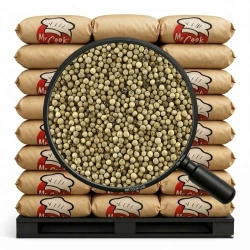
White pepper - what is it and how to choose the best one?
White pepper, although less intense than its black cousin, is distinguished by its delicacy and subtlety of flavour. Its slightly fermented aroma and milder spiciness make it valued in the kitchen for its ability to delicately enhance the flavour of dishes without dominating other ingredients. In terms of spiciness, it is between black pepper and the least spicy green pepper. Ideal for delicate sauces and white meats, white pepper offers culinary finesse and sophistication.
-
What is the difference between white pepper and black pepper?
White pepper, like its black counterpart, comes from the Piper nigrum plant. The main difference is the production process. For white pepper, the ripe fruit is used, which naturally takes on a red colour.
-
White pepper production process:
The key step in the production of white pepper is water fermentation. After harvesting, the ripe red peppercorns are submerged in water for a period of 7 to 10 days. During this fermentation process, the outer red skin of the fruit is broken down, making it easier to remove later.
Once fermentation is complete, the softened skin is removed and the inner kernels are then washed and dried, usually in the sun or in drying kilns, which gives them their characteristic white colour. Nowadays, due to quality control, sanitary requirements and the predictability of the process, producers most often use dryers. They offer control over the drying process, allowing the grains to be dried evenly in a shorter period of time, while maintaining the appropriate microbiological parameters.
For some people, especially those trying white pepper for the first time, this fermentation flavour may be surprising. However, in cooked dishes, this distinctive flavour and aroma becomes less pronounced and the pepper adds depth and a subtle spiciness.
-
Use in cooking
White pepper is often preferred in dishes where black pepper could be too dominant or visually inappropriate. It is ideal for cream-based sauces, cream soups, poultry or fish dishes. Because of its subtle flavour profile, it is also often used in Asian cuisine, especially in Thai and Chinese dishes.
-
Quality classification of white pepper
White peppercorns in the professional trade come in different quality variants. The quality of white peppercorns, as with its black counterpart, is determined by bulk density. This is a measure of how many grams of white peppercorns fit into 1 litre of volume. According to the Codex Alimentarius International Food Standard, there are 3 quality categories for white peppercorns. As with black pepper, I have chosen three parameters to illustrate the differences between these classes, bulk density, piperine and essential oil content:
| White pepper |
Bulk density (Min.) |
Piperine content (Min.) |
Essential oils (Min.) |
| Class I |
600 g/l |
4.0% |
1.5 ml/100g |
| Class II |
600 g/l |
3.5% |
1.5 ml/100g |
| Class III |
550 g/l |
3.0% |
1.0 ml/100g |
As the bulk density and essential oil content for Class I and II white peppercorns do not differ, the minimum piperine content must be taken into account.
The ESA in the aforementioned document on minimum quality requirements for spices in turn sets the following requirements for white pepper:
-
Ash content: maximum 3.5% in dry matter
-
Acid-insoluble ash: maximum 0.3% on a dry matter basis
-
Moisture content: maximum 12%
-
Essential oils (V/O): minimum 1.5 ml/100g
We have already learnt about the two forms of pepper extracted from the Piper nigrum plant, we will now move on to green pepper and then discover other pepper species and blends that contain the word pepper in their name. One of them, does not contain any pepper species, so I encourage you to read on.
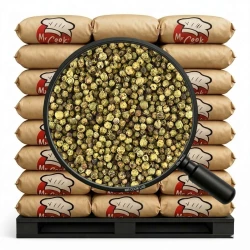
Green pepper - what is it and how do you choose the best one?
Sourced at the earliest stage of maturity from the Piper nigrum plant, green pepper is characterised by a less intense, but fresh and slightly spicy flavour profile. It is the least spicy of all forms of pepper extracted from Pier nigrum. Discover how this young and delicate form of pepper attracts culinary enthusiasts and enriches the flavour palette in a variety of dishes.
-
What does green pepper look and taste like?
Green pepper, harvested at the earliest stage of maturity, can not only be preserved, but also dried. Dried green pepper, although less common than its pickled variety, retains the delicate flavour and aromatic notes of fresh peppercorns, while gaining a slightly more intense character.
In the drying process, green peppercorns are spread out in the sun or in drying kilns, where they slowly lose moisture while retaining their natural colour and flavour. Sun-drying is the traditional method, more commonly used on smaller farms. It allows a product with a slightly more varied taste, depending on weather conditions and drying time. Nowadays, industrial dryers are used, which provide control over the process, allowing the grains to dry evenly in a shorter time. This method is more commonly used in larger-scale production, guaranteeing a more uniform final product.
Dried green pepper has a milder flavour than its black or white counterpart, while retaining a fresh, fruity note. It is an excellent choice for those looking for a more subtle pepper for their dishes. It can be used in whole grains or ground, adding a delicate but distinct flavour to a variety of dishes.
-
Culinary uses for green pepper
Green pepper has a wide range of culinary uses due to its milder flavour and lower spiciness than its black or white variety. It is an ideal addition to delicate sauces, marinades for meat and fish, and as a garnish and flavouring element in many dishes. Fresh, preserved green peppercorns are often used in French cuisine, especially in the classic dish known as 'steak au poivre', or steak with pepper. Green pepper also goes well with game dishes, adding depth without dominating their natural flavours.
-
Quality classification of green pepper
Based on Codex Alimentarius data, green pepper is classified into three main quality categories, which differ in their physical characteristics. Unlike white and black pepper, it was not decided to introduce a classification in terms of bulk density and piperine content. The classification is as follows:
| Type/Class |
Bulk density (Min.) |
Piperine content |
Essential oils (Min.) |
Other Plant Materials (Max.) |
| Green pepper Class I |
Not applicable |
Not applicable |
1.0 ml/100g |
0.5% |
| Green pepper Class II |
Not applicable |
Not applicable |
1.0 ml/100g |
1.0% |
| Green pepper Class III |
Not applicable |
Not applicable |
1.0 ml/100g |
1.2% |
The different quality classes therefore differ in the essential oil content and in the parameter other plant materials. That is, those that come from the plant but should not be found in green pepper as a spice. The best quality class of green pepper is, of course, I.
Let us also look at the ESA requirements for green pepper:
-
Ash content: maximum 3.0% in dry matter
-
Acid-insoluble ash: maximum 0.3% in dry matter
-
Moisture content: maximum 13%
-
Essential oils (V/O): minimum 1.0 ml/100g
Green peppercorns are not classified in terms of bulk density or the content of so-called 'light berries' (light pepper) as is the case with black and white peppercorns. However, the key parameters for green pepper are the minimal presence of foreign plant matter, the absence of mould, and the maximum reduction of insect-damaged grains and other impurities. Each quality grade of green pepper determines the corresponding maximum percentage of the listed undesirable elements, with category I indicating the best quality green peppercorns.
Read also: Which spices for fish soup
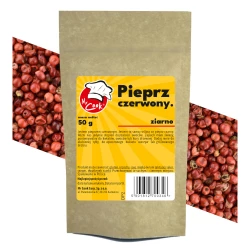
Red (pink) pepper - what is it and how to choose the best one?
-
Origin and appearance
Red pepper, often referred to as pink pepper, is mainly native to South America and the islands in the Reunion Archipelago, although it is not a true pepper from a botanical point of view. The leading supplier in terms of volume on the European market is Brazil. However, it is worth getting to know the red pepper from Madagascar, as the country is famous for producing high-quality spices. It belongs to the Anacardiaceae family and is the fruit of the Schinus molle or Schinus terebinthifolius plant. It has a delicate reddish-pink husk and is usually harvested fully ripe, which gives it its characteristic intense colour.
-
Flavour and use in cooking
Red pepper has a mild, slightly sweet flavour with subtle fruity notes. In the kitchen, it is mainly used as a decorative addition to dishes because of its attractive appearance, but also for delicate dishes that require a more subtle spicy touch. It goes well with fish, poultry and seafood dishes, as well as with some desserts and fruit salads.
-
Quality classification of red pepper
At the date of writing this article, I have not found a Codex Alimeantarius standard for red pepper. However, we can refer to the requirements given by the European Spice Industry Association (ESA), which has set minimum quality criteria for red pepper. It is worth noting that the quality of red pepper is often judged on the basis of appearance, absence of impurities and moisture content.
As stated by the European Spice Association (ESA) in the 'Quality Minima Document Rev. 5' , the quality classification of red pepper (Schinus) includes the following maximum permissible values for certain parameters:
-
Ash: maximum 7.0% by weight
-
Acid-insoluble ash: maximum 1.8% by weight
-
Moisture: maximum 14% by weight; (freeze-dried red pepper: 8%)
-
Essential oils (V/O): minimum 2.0 ml/100g
These parameters are key in assessing the quality of red pepper and must be met for the product to be considered to meet ESA standards. Acceptable levels of ash and acid insoluble acid are indicators of the purity and quality of the spice, while moisture content affects freshness, shelf life and susceptibility to mould and other microorganisms. A minimum amount of volatile oils indicates the intensity of the spice's flavour and aroma. But how do we choose the best red pepper? Visual assessment in this case can tell us a lot about the quality of red pepper, when all the grains are of uniform, intensive colour and there are no remains of plant material between them, we can initially judge that we are dealing with a high quality raw material. If we have the opportunity, it is worth looking at the specifications provided by the manufacturer or distributor. From this we can determine the essential oil content.
All of the above values should be met in order for the red pepper to meet the minimum quality requirements set by the ESA, which ensures that customers receive a product with the expected taste and aromatic characteristics.
Wild pepper - Borbonese pepper (Voatsiperifera) from Madagascar - a niche spice for connoisseurs
We now discover wild pepper from Madagascar - an extraordinary spice that combines a unique local origin, hand-harvesting and exceptional aroma. Its unique character makes it a culinary treasure, sought after by gourmets the world over. I invite you to discover its secrets and culinary potential.
-
Mysterious wild pepper (Voatsiperifera) from the forests of Madagascar
Wild pepper, also known as borbonese pepper or Voatsiperifery (this is a name derived from the Malagasy language, in which 'voa' means fruit and 'tsiperifery' is the name of the pepper plant Piper nigrum var. borbonense, from which the pepper comes. It grows in the natural habitat of the humid forests of Madagascar. Reaching maturity at impressive heights, often at treetop heights that grow up to 20 metres, it presents a challenge to both collectors and those who wish to preserve its wild nature. The height at which wild pepper grows influences its unique flavour and aroma, concentrating the essence of the island's wild, tropical nature in the seeds. Due to the height of the trees, harvesting is carried out in the traditional way, by hand. Local people, thanks to knowledge passed down from generation to generation, have the necessary knowledge and skills to harvest the mature beans from such tall trees. Protecting the plants that give this unique pepper is very important to keep the natural environment intact.
-
Flavour and aroma profile of wild pepper
The borbonese peppercorns harvested from trees at such a high altitude exhibit a rich and concentrated aromatic profile. They exhibit both earthy notes and delicate citrus accents, which together form a harmonious whole. These characteristics make this pepper highly prized by chefs and gourmets.
-
The culinary potential of wild pepper, also known as Voatsiperifera
Wild pepper from Madagascar, also known as Voatsiperifery, is relatively rare and exclusive, so it is not as widely used as the more accessible pepper varieties. There is not one particular dish that is known worldwide using this particular type of pepper. Instead, Voatsiperifery is used to add a unique, intense flavour and subtle heat to a wide range of dishes, from simple to sophisticated.
Here are some examples of dishes and applications in which wild pepper from Madagascar can be used: steaks and grilled meats of gourmet quality, fish and seafood, bearnaise sauce, and in finely ground form it can be an interesting addition to desserts.
Voatsiperifery is a premium culinary product, which is why it is often on the menus of gourmet restaurants, where chefs use it to create unique dishes and flavours. Due to its uniqueness and price, it is more often used in high-end culinary than in everyday cooking.
Read also: How to season and roast a whole chicken
Sichuan pepper - an exotic flavour from Asia
Meet Sichuan pepper - a signature ingredient of Asian cuisine that stands out for its unusual combination of citrus aroma and tingling effect, bringing a whole new dimension of flavour to any dish.
-
What makes it different from other varieties?
Sichuan pepper, also known as Sichuan or Szechuan pepper, is significantly different from other pepper varieties. It is not a true pepper, but the fruit of several species of the genus Zanthoxylum, a member of the rutaceae family.
-
Taste and use in cooking
Sichuan pepper has a complex flavour that combines citrus notes with an earthy undertone and a characteristic tingling sensation. This flavour is due to the presence of the compound hydroxy-alpha-sanshool, which also gives a sensation of slight anaesthesia on the tongue. It is an indispensable ingredient in Sichuan cuisine, famous for its intense and spicy dishes. It is often used whole or ground in various spice blends, such as the Chinese Five Flavours blend. It lends a unique aromatic touch to meats, vegetable dishes, as well as spicy sauces and soups, such as the famous hot pot soup.
-
Quality of Sichuan pepper - problematic pesticides
The biggest challenge for us importers and spice producers regarding Sichuan pepper at the date of writing this article is the high concentrations of pesticides. We confirmed this issue with our own testing of samples we received from Chinese Sichuan pepper exporters, the most problematic being the pesticide Acetamiprid. This is why Sichuan pepper has disappeared from the offer of many importers, as it is very difficult to find raw material that meets the strict EU requirements in this respect. This translates into high prices for this product.
Once the pesticide risks have been overcome, it is worth knowing which characteristics to look out for in Sichuan pepper, as there are no universal quality standards set by the European Spice Association (ESA) or Codex Alimentarius for Sichuan pepper. Criteria that can be used to judge quality are freshness and intensity of aroma - the more pronounced the citrus aroma and the stronger the tingling sensation, the higher the quality. Also pay attention to colour - good quality beans are usually light brown to reddish in colour and should not be too dark, which may indicate very long storage or improper storage. The appearance of the grains is also important; they should be whole, without a lot of stalks, leaves or other debris.
Coloured pepper - what is it and how to choose the best one?
Coloured pepper is a unique blend of all forms of pepper derived from the Piper nigrum plant and red pepper. Consumers around the world have come to love it for its variety of flavours and attractive appearance.
-
What is a coloured pepper?
Coloured pepper is a unique and aesthetically pleasing blend of three pepper varieties derived from the Piper nigrum plant, that is: black, white and green. The final ingredient is red pepper. Each type brings its own unique flavour and aromatic characteristics to the blend, creating a complex palette of sensations. Black pepper adds intensity and sharpness, white pepper adds subtlety, green pepper adds freshness and delicacy, and red pepper adds sweet and fruity accents.
-
What is worth considering when choosing a colour pepper supplier?
Choosing the right coloured pepper supplier requires attention to the proportions of the blend. At Mr Cook, we use a volumetric approach. This means that the grains are mixed proportionally by volume. The best quality coloured pepper should be composed in this way, because red pepper, which is the most expensive in the mix, has the lowest bulk density. That is to say, if we were to measure it by weight, after mixing it visually there would be relatively little of it compared to black pepper.
-
How do you make a coloured pepper?
To prepare a coloured pepper mix you will need 4 varieties of pepper: black, white, green and red. When preparing the coloured pepper mix, it is a good idea to dispense with weight ratios. Instead, use a graduated dish or spoon to measure out the ingredients. The idea is to mix the ingredients in equal proportions by volume, not by weight. This is because 100g of black pepper is not equivalent in volume to 100g of red or green pepper. An ideal coloured pepper, on the other hand, should have the volume proportions maintained.
-
Use of coloured pepper in cooking
Coloured pepper is extremely versatile in the kitchen. Its rich flavour goes well with a wide range of dishes, from meats and fish to salads and sauces. It also makes an attractive decorative element, adding colour and elegance to the plate. It is particularly recommended for dishes where you want to emphasise their natural flavour without dominating them with too much sharpness. It is ideal for sophisticated dishes that require a subtle but distinct flavour accent.
Herbal pepper - a traditional Polish blend of spices and herbs
A characteristic Polish spice and herb blend originally based on locally available ingredients, let's take a closer look.
-
What is herbal pepper?
Herbal pepper is not a single spice, but a carefully selected blend of various herbs that can be used as an alternative to traditional spices such as black pepper. The composition of this herbal blend, offered by the blog owner, is a rich combination of herbs such as mustard, cumin, marjoram, savory, parsley, dill, coriander, thyme, tarragon and leek. This variety of ingredients has its roots in the rich Polish tradition of herbalism and cooking, where whatever was at hand was used to create blends for both health and taste.
-
How to prepare it and when to use it in the kitchen?
To prepare herb pepper, combine the herbs listed in the correct proportions. You can experiment with their quantities to achieve the desired flavour profile that best complements the dishes in question. Herbal pepper is great for dishes where you want a richness of flavour without the dominant sharpness that traditional pepper gives.
- How to make herb pepper at home:
Herbal pepper has many variations, and below is one of them:
White mustard - 4 teaspoons
Coriander seeds - 2 teaspoons
Cumin seeds - 1 teaspoon
Granulated garlic - 1 teaspoon
Hot paprika - 1/2-1 teaspoon (if you are not expecting spiciness you can omit this ingredient)
Fenugreek - 1/2 teaspoon
Marjoram - 1/2 teaspoon
Lovage leaf -1/2 teaspoon
Mix the ingredients thoroughly, then grind them in a grinder. The mixture prepared in this way is best stored in a glass jar, in a dry and dark place.
Herb pepper is ideal for a variety of dishes, including roasted and grilled meats, vegetables, soups, sauces, and as an addition to salads and marinades. Its versatile and balanced flavour makes it ideal for everyday use in the kitchen.
Pepper-based blends
Orange and lemon pepper are specific spice blends with hammered black peppercorns as the primary ingredient. They have gained popularity in different parts of the world, especially among cooking enthusiasts looking for new flavours and ways to liven up traditional dishes.
-
Orange pepper - composition and use
The blend known as orange pepper is a fine combination of traditional pepper with the addition of aromatic orange peel, which gives it a unique fruity character. It is additionally enriched with sweet paprika and turmeric, which bring depth of flavour and colour, while a subtle note of sweetness is achieved through the gentle addition of sugar. This distinctive blend finds a wide range of uses in the kitchen - from enhancing the flavour of grilled meat, to adding character to sauces, to a surprising accent in salads and marinades.
-
Lemon pepper - a refreshing touch in dishes
Lemonpepper is a blend that brings refreshment to any dish, thanks to the definite presence of lemon zest. Black pepper forms the base here, which is complemented by turmeric which adds colour and a slight saltiness to bring out the citrus flavour even more. This blend is ideal for fish dishes, poultry and salads where you want to add freshness without overpowering the flavour of the raw ingredients. As a result, lemon pepper has become popular in kitchens around the world, adding a light and refreshing twist to traditional dishes.
Orange pepper is more characteristic of European and Mediterranean cuisine, while lemon pepper pairs better with Asian dishes.
Using pepper in home and catering cooking
-
With which spices should pepper be combined?
-
Black pepper: Black pepper is versatile and goes with almost every spice. It combines perfectly with garlic, onion, cardamom, nutmeg, cloves, ginger, coriander, roman cumin, marjoram, and thyme. It enhances the flavour of meats, soups, sauces, vegetables and many other dishes.
-
White pepper: Finds common harmony especially with spices with a milder profile, such as garlic, ginger, coriander, nutmeg and cardamom. Often used in dishes where we want to maintain a uniform, light colour, as in sauces, cream soups and light meats.
-
Green pepper: Its fresh and delicate spiciness goes well with thyme, rosemary, marjoram and basil. It is often used in dishes with delicate flavours, such as fish dishes, poultry and light sauces, where you want to avoid a dominant spiciness but add a subtle spicy touch.
-
Red pepper (pink): the pink pepper, which is actually a berry, harmonises with exotic spices such as vanilla, cardamom or a spice blend. Its fruity character makes it suitable for use in desserts, cakes and tender meats such as poultry.
-
When to use whole pepper and when to use ground pepper?
-
Whole pepper: It is best used in marinades, curing, and in long cooking processes such as braising. Whole pepper releases its flavours slowly, which is ideal for dishes that cook for many hours.
-
Ground pepper: ground pepper is preferred when you want to quickly add flavour to dishes that will not be cooked for a long time, such as scrambled eggs or salads. Ground pepper loses its flavours more quickly, so it is best to grind the pepper immediately before use.
-
How should pepper be stored to preserve its freshness and aroma?
Storing pepper is key to preserving its intense aroma and pungent flavour. Here are specific tips to help maximise the freshness of the spice:
-
Away from heat: Avoid storing pepper near heat sources such as a gas cooker, oven or even the dishwasher. Heat can cause the essential oils in the pepper to break down, leading to a faster loss of its aromatic properties.
-
Appropriate temperature: It is best to store pepper in a place with a constant, moderate temperature. Too much temperature variation can accelerate the aging process of the spice.
-
Protection from light: Light, especially direct sunlight, can bleach peppercorns and weaken their flavour. Therefore, store them in a dark place or in opaque containers.
-
Airtight containers: To prevent loss of flavour, pepper should be stored in tightly sealed containers. Glass or ceramic are best, but metal or plastic can also be used, as long as the containers are well sealed.
-
Moisture: It is the enemy of pepper. High humidity can lead to mouldy grains and loss of flavour. Store pepper in a dry place where humidity is controlled.
-
Away from other smells: Pepper, like other spices, can absorb odours from its surroundings, which can affect its taste. For this reason, it should not be placed next to strongly smelling products and special care should be taken to seal spice containers tightly.
-
Long-term storage: For long-term storage, peppercorns are best suited, as ground pepper loses its flavour more quickly. Whole peppercorns can retain their properties for many years, while ground pepper should be used up within a few months.
Following these rules will help keep your pepper in top condition and ensure that its aroma and flavour are intense every time you add it to your dishes.
-
What kitchen utensils are essential when handling pepper?
Pepper grinders will be essential for processing pepper, as they allow the grains to be ground freshly, making a significant difference to the flavour and aroma of your dishes. Mortars can also be useful, allowing the grains to be hammered and the pepper to be more easily combined with other spices into mixtures. A coffee grinder will also work well in a domestic setting.
-
Interesting facts and additional information for passionate and professional cooks
For passionate cooks and professionals, it is worth looking out for original combinations of pepper with other ingredients such as chocolate or fruit, experimenting with non-traditional flavour combinations. In this article you have learnt a lot of information about the different pepper species, making it easier for you to experiment with pepper to discover original and aromatic compositions.
Summary
I have covered many aspects of pepper, presented the different varieties of pepper, their production process, quality parameters, popular blends and the principles of the culinary use of pepper.It is time to conclude.
-
Diversity of pepper flavour and aroma
Pepper, although often seen as a simple spice, in fact offers a wealth of flavours and aromas that can definitely enrich the culinary palette. From the spiciest, most pronounced black pepper to the more delicate white pepper, green pepper with a hint of freshness to the sweet and fruity pink pepper, each type of pepper has its own unique role in the kitchen. Choosing the right pepper can elevate a dish to the next level and give it the character that home cooks and professionals alike are looking for.
-
What to look for when choosing a pepper - information for professional buyers and chefs
Choosing a reliable supplier or manufacturer of spices, including pepper, should not be based solely on economic criteria. A low price can often mean lower quality or even, in the worst case scenario, an adulterated or unsafe product. It is worth paying attention to quality standards, such as those set by the Codex Alimentarius or the European Spice Association (ESA), which, although one of many ways of classifying, can provide a solid basis for assessing products, especially in different regions or countries.
I encourage all consumers to look for certified producers who guarantee the safety of spices and high quality. Food producers, including spices, for whom consumer health is important, choose certification standards that are recognised by the GFSI (Global Food Standard Initiative). Such certifications are BRC, FSSC 22000 and IFS. As these systems do not certify the product, but the company and its processes - you will not find this information on the packaging, so it is worth looking at the manufacturer's website, where there will certainly be information on the certifications they have. And let's not forget the importance of spices certified for organic farming, whose cultivation methods have a direct impact on product quality, consumer health and environmental protection.
To sum up, pepper is not only the basis of spices in the kitchen, but also a treasure trove of possibilities for those who want to experiment with new flavours. When choosing pepper, let's be guided not only by taste and aroma, but also by trust in the source of the pepper, which will ensure not only a better culinary experience, but also peace of mind for food safety.
It is also worth emphasising that the criteria referred to above are one of many possible ways of qualitatively classifying spices. My main point was to draw attention to the fact that when choosing a supplier/producer of spices, including pepper, one should not be guided only by the economic factor, because then we are at best exposed to a low-quality product, and at worst to an adulterated or even dangerous one from the health point of view.
Mr Cook is a Polish online spice wholesaler that stands for quality and taste. Our products, from specialised spices to herbs and blends, are the answer to the needs of the modern kitchen. Thanks to us, every chef can feel like a true artist, creating dishes that delight with depth and richness of flavours. Explore our range and let Mr Cook become your secret to culinary success.