Choosing the right chicken
To roast a really tasty chicken, we need to start with the basics - choosing the right meat. Its quality has a direct impact on the taste and texture of the final dish. Here are some tips on what to look out for:
Fresh chicken has a bright, pink skin and is free of unpleasant odours. If you have the opportunity, visit your local market or farm where you can find out the source of your chicken. We know it's not an easy task, but it's worth supporting local producers.
-
Free-range or conventional?
Free-range chickens often have a more pronounced flavour due to the natural way they are fed. The meat is also firmer and less watery. Although they are more expensive, the difference in taste can make up for the expense.
-
Weight of chicken for whole roasting
The best choice would be a chicken weighing 1.7-2kg. Such a chicken will have juicy meat after roasting.
Read also: How to season chicken
Preparing the chicken before roasting
Proper preparation of the meat is the key to success. It ensures perfect seasoning, as well as optimal conditions for a crispy crust and juicy meat. Here are the key steps:
-
Do you rinse the chicken before cooking?
In the past, it was recommended to rinse raw chicken in cold water before cooking. However, many food safety organisations (such as the Food Standards Agency (FSA) in the UK) now recommend avoiding this step to prevent the spread of bacteria in the kitchen (such as Campylobacter). These bacteria are destroyed in the heat treatment process, which is why it is so important to use a meat thermometer and follow the minimum heat treatment temperature recommendations. This also has the added advantage that you will not bring it to too high a temperature, so the chicken meat will remain juicy. What temperature is safe for chicken meat? You can find out by reading the rest of this article.
Regardless of your decision to rinse, it is very important to dry the chicken thoroughly before roasting. Using paper towels, pat the meat dry so that the skin is completely dry. A dry skin contributes to its crispy effect during roasting. You will find out what is key in terms of crispness in the next section.
Make sure there are no leftover organs, giblet bag or other unwanted elements inside the chicken. If they are present, remove them. In the internal areas it may also be excess fat which you will remove with a sharp knife.
-
Set aside at room temperature
Before the chicken goes into the oven, it's a good idea to let it rest for about 30 minutes to come to room temperature. This will ensure more even roasting.
By preparing the chicken properly, we can be sure that it will not only be tasty, but also look great on the table.
Read also: How to spice up pumpkin soup
Secrets of seasoning a whole roast chicken
Whole chicken can be seasoned in a variety of ways. When it comes to flavours, it's worth betting on the classics. Salt, garlic, paprika, pepper - but where do you give these seasonings - to the chicken, on the chicken? We calmly rush to the answer:
- Salt: This is an essential ingredient for a crispy crust. It will draw excess moisture out of the crust (the water in the crust is the enemy of its crispness). After sprinkling the crust with salt, it is a good idea to leave the chicken in the fridge for a few hours to allow the salt to absorb excess moisture. The minimum time needed is 60 minutes. It is worth remembering that after 3-4 hours the salt will also start to penetrate through the skin into the chicken meat. Dry the skin thoroughly with a paper towel before roasting.
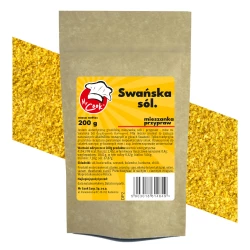
- Seasoning mixes: For the crust, mixes with a higher salt content (above 55%) are ideal. Swain's salt is ideal to replace the salt in the above section. It is worth being more careful when drying the crust with a towel - so as not to take off the seasoning. Just press it down, avoiding rubbing it. This will also ensure that it is not left on the surface of the chicken.
- Other seasonings: In addition to salt, you can use pepper, paprika or dried garlic on the skin. Remember not to use fresh herbs or garlic, which can burn. These are added after the chicken skin has been dried with a towel.
-
Put spices under the skin of the chicken:
To put the spices or butter under the skin you need to gently loosen it on the breast and legs of the chicken. This is done with your fingers or a spoon, gently so as not to break the skin.
- Seasoning mixes with moderate salt content: If you are using a spice blend under the skin, we recommend those with up to 40% salt content. Amber seasoning for chicken is an excellent choice here, giving a deep flavour without the risk of over-salting.
- Herbs and garlic: Fresh or dried herbs such as rosemary, thyme or sage under the skin will add a deep flavour to the chicken meat. Garlic deserves special attention. Fresh finely chopped or crushed will be best. Granulated gar lic will also work well under the skin.
- Butter or oil: A mixture of butter or oil with herbs and garlic will work well under the crust, making the meat juicier. It also helps with the crispness of the crust.
-
Spices for the inside of the chicken:
- Onions and garlic: Large pieces of onions or heads of garlic are perfect for the inside of the chicken. They add extra juiciness and depth of flavour.
- Whole herbs: Bundles of fresh rosemary, thyme or basil will add depth of flavour.
- Citrus: Putting lemon or orange slices inside the chicken will add freshness and moisture.
You can combine all these methods, but the balance of flavours is important. It has to be in line with your tastes, but it is always worth being careful when it comes to seasoning. Good quality meat will defend itself with flavour, and the seasonings are there to make the chicken perfect. Feel free to experiment with proportions and spice combinations to find the perfect flavour for you.
Read also: Vegetables for the pan: Which spices and herbs to use and when to add them
To make the chicken look aesthetically pleasing after roasting, it is a good idea to tie the chicken's legs together. Alternatively, you can also make a fine incision in one of the legs and pierce it through the other, which will give the chicken a more attractive appearance after roasting.
Secrets of juicy meat in roast chicken
The juiciness of a roast chicken is largely dependent on the temperature and cooking time. There are various methods, but some are more effective than others in achieving the desired meat and skin texture.
-
Rule of thumb of 1h per 1kg of chicken weight
The traditional method states that the chicken should be roasted for one hour for each kilogram of meat at about 180°C. While this is a proven method, it does not always guarantee optimum juiciness and crispness.
-
High temperature to start with - the best method
Starting roasting at a high temperature (around 220°C) for a short time (e.g. for 20-30 minutes) and then reducing the temperature (to around 180°C) is, in our opinion, the best approach. This sequence quickly browns the crust and helps to keep the juices inside, keeping the meat juicy and the crust crispy from the start.
-
Increase the temperature at the end
You can also increase the temperature towards the end of roasting, for the last 10-15 minutes, to around 220°C to add extra crispness to the crust. However, this method carries the risk of drying out the meat, as prolonged exposure to high temperatures can cause the interior to lose moisture.
We will urge you to use a meat thermometer at every opportunity - firstly, it lets you know when our meat has reached the right temperature - the minimum safe temperature for chicken meat is 75C. Secondly, you have full control over the process of roasting, grilling, etc. Especially if you are a novice cook - this is very helpful. And if you are cooking professionally - you will ensure the safety of your customers. Where to measure the temperature of the meat of a whole roast chicken? Insert the tip of the thermometer deep into the chicken breast.
Read also: Secrets of seasoning soups
Crispy chicken skin - how do you get it?
A crispy crust is the hallmark of a perfectly roasted chicken. It is achieved with the right preparation and roasting techniques.
The effect of drying the crust on its crispness: Before roasting, it is a good idea to dry the chicken skin thoroughly with a paper towel. A damp crust will not become crispy, and removing excess moisture from the outside is essential in achieving the desired effect.
-
The role of salt in the crust drying process:
As mentioned above, salt helps to remove moisture from the crust. Whether you use salt or a suitable spice mix (with a high salt content), this is a key step in the process of achieving a crispy crust. Salt helps to draw excess water out of the crust, so this is a key step.
As we discussed in the previous section, starting the baking with a high temperature is key to getting a crispy crust. Quickly toasting the crust at the beginning makes the outer layer of the crust crispy in the first stage of baking. All that remains is to get the inside of the chicken meat to 75C (which is best checked with a meat thermometer).
-
Aluminium foil can kill the crispy crust:
Aluminium foil works well for juicy meats, but it is not necessary for chicken roasted whole, and it will certainly kill the crispness of the skin. However, if you choose to use foil, do so in the middle or final stages of roasting.
-
The role of fat in crust crispness:
Putting fat, such as butter, under the crust before roasting can help with crust crispness and also make the meat juicier.
Striving for the perfect crust crispness requires attention and precision, but it is certainly worth the extra time and effort to enjoy the perfect taste and texture of roast chicken.
Read also: How to season hummus
Additions and sauces perfect for roast chicken
Whole roast chicken is a dish that is extremely tasty on its own, but the right additions and sauces can take its culinary qualities to the next level. Below are suggestions that will perfectly complement the taste of roast poultry:
-
Additions to roast chicken
- Potatoes: They can be roasted whole, mashed or fried. Potatoes go perfectly with chicken, especially when cooked with herbs and butter.
- Grilled or roasted vegetables: Peppers, courgettes, aubergines or cauliflower - these will go perfectly with the flavour of roast chicken.
- Groats or rice: Good for those who prefer lighter side dishes. Various herbs and spices can be added to enrich the flavour.
- Salads: Salad greens, tomatoes with cucumber and onions can make a great, refreshing contrast to hot chicken.
-
Sauces that go well with chicken
- Garlic sauce: Creamy and strong, perfect for those who love intense flavours.
- Lemon-olive sauce: A fresh, light sauce that adds extra juiciness and flavour to the chicken.
- Yoghurt sauce: With herbs and spices, this sauce is cooling and balances the flavours perfectly.
- BBQ sauce: Slightly sweet, smoky and spicy - it enhances the flavour of the chicken perfectly.
-
How to choose sauces and accompaniments for roast chicken
There is no definite answer to this question, as much depends on individual tastes. However, it is important to create a harmony of flavours. If you have a highly seasoned chicken, it is advisable to choose a sauce with a milder flavour and vice versa. And when it comes to side dishes, it's worth thinking about balance - chicken eaten with the skin on is filling, so light, fresh salads will be good.
In summary, the right additions and sauces not only enhance the flavour of roast chicken, but also create a complete, balanced and satisfying dish.
Summary and final tips
Roasting a whole chicken is an art that combines traditional techniques with modern approaches. To achieve a perfectly roasted chicken, it is worth taking the time to properly prepare, season and choose the right roasting method. In this chapter, we summarise the most important steps and give additional tips to help you avoid common mistakes.
-
Key steps to the perfect chicken
- Choosing a good quality chicken: As we mentioned in para. 2, choosing the right meat is key. Free-range chicken usually offers better flavour and texture.
- Choosing the right seasonings for the chicken: As we outlined at the beginning, the way you season will affect both the flavour of the meat and the crispness of the skin.
- Thorough preparation: Washing, drying and seasoning properly (points 3 and 4) is key. Remember the role of salt in drying the crust and techniques such as initial high-temperature roasting (point 5).
- Selecting the right temperature and baking time: Both the high temperature at the start of roasting and the classic 1h per 1kg of meat rule will help you achieve a perfect result.
-
The most common mistakes and how to avoid them
- Not drying the chicken before roasting: Can lead to steaming in the oven and make the skin less crispy.
- Opening the oven too often: Heat loss can affect cooking time and meat quality.
- Undercooking: It is worth paying attention to the right amount of salt and other seasonings.
To get juicy chicken with a crispy skin, the key is a balance between proper preparation, seasoning and roasting technique. With the knowledge gained and a conscious approach to every step, even a novice cook can achieve perfect results.
Mr Cook is an importer and wholesaler of spices that stands for quality and taste. From speciality spices to herbs and blends, our products are the answer to the needs of the modern kitchen. Thanks to us, every chef can feel like a true artist, creating dishes that delight with depth and richness of flavour. Explore our range and let Mr Cook become your secret to culinary success.