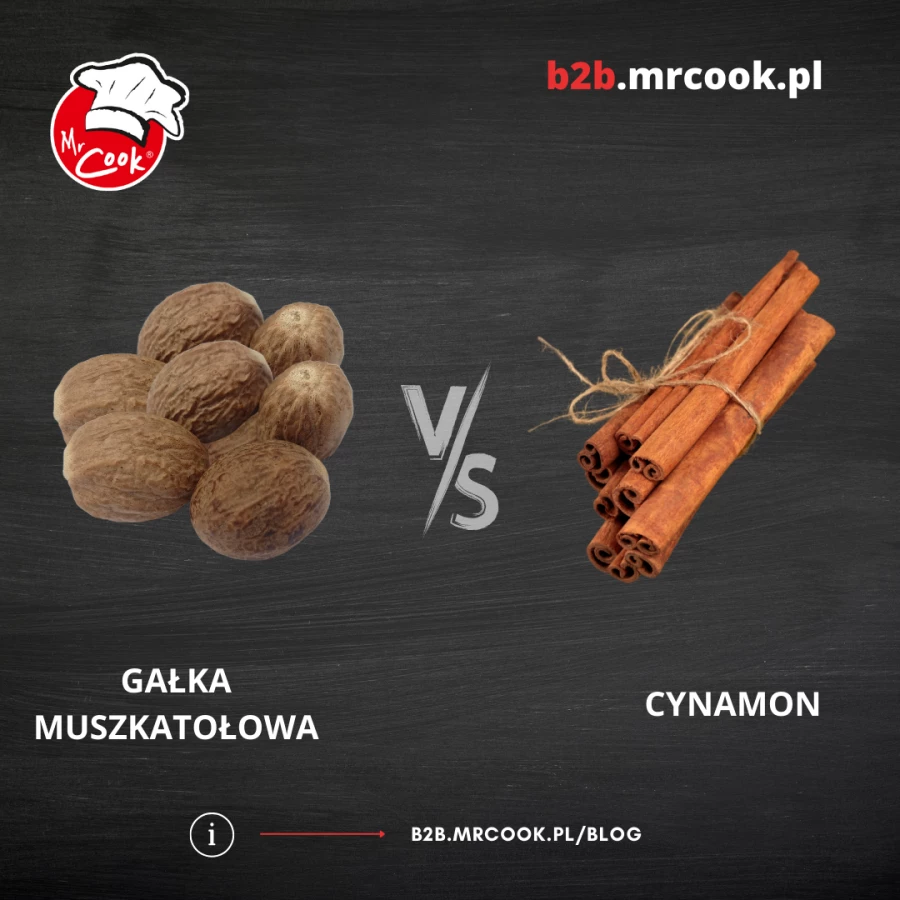
Cinnamon
Cinnamon comes from the bark of trees belonging to the genus Cinnamomum. The most prized varieties are Ceylon cinnamon (Cinnamomum verum) and cassia cinnamon (Cinnamomum cassia). Ceylon cinnamon has a milder flavour and more complex aroma, while cassia is more pungent and intense. Cinnamon is available in stick or powder form and is widely used in cuisines around the world, especially in desserts and drinks.
Nutmeg
Nutmeg comes from the seeds of the nutmeg tree (Myristica fragrans), which grows mainly on the islands of Indonesia. Nutmeg is available both in whole nut form and in ground form. It has an intense, spicy flavour with sweet and peppery notes, making it a versatile spice used in many cuisines, both in sweet and savoury dishes.
Price comparison of cinnamon stick and nutmeg nut
Prices of cinnamon and nutmeg can vary depending on the quality, origin and form in which they are sold.
-
Cinnamon in sticks: The price of cinnamon in sticks is 2-4 times lower than nutmeg, depending on its origin and quality. Ceylon cinnamon is always more expensive than cassia, due to its milder flavour and more complex aroma.
-
Nutmeg (nut): The price of nutmeg in nut form is usually higher than ground nutmeg. It is 2-4 times more expensive than cinnamon. It is worth noting that less nutmeg is added, so its yield per 100g is higher than that of cinnamon.
Uses of each spice
Both spices have a wide range of uses in cooking, but differ in terms of the traditional dishes to which they are added.
-
Cinnamon: It is most commonly used in baked goods such as cakes, cookies and also in desserts such as baked apples or rice on milk. Cinnamon is also popular in Asian and Middle Eastern cuisines, where it is added to meat dishes, curries, and beverages such as tea or coffee.
-
Nutmeg: It is more versatile, often used in both sweet and salty dishes. It goes well with béchamel, potatoes, pumpkin and spinach. It is also indispensable in classic baked goods such as gingerbread and in drinks such as mulled wine and eggnog.
Nutmeg has a stronger flavour and cinnamon a stronger aroma
-
Flavour: nutmeg has a more intense flavour than cinnamon. Its taste is more complex, combining sweet, spicy and slightly peppery notes. Because of its intensity, it is used in smaller quantities. The ratio of quantity to cinnamon is approximately 1:4, which means that one measure of nutmeg corresponds to four measures of cinnamon.
-
Aroma: Cinnamon has a stronger aroma that is both sweet and warm, evoking baked apples and warm winter drinks. Its aroma is more recognisable and is often used in aromatherapy and cosmetics.
Do these two spices complement each other or can they be used interchangeably?
Cinnamon and nutmeg can complement each other, but they cannot always be used interchangeably. Their flavours and aromas are so different that replacing one spice with the other can significantly change the character of a dish.
-
Complementing each other: In many recipes, especially in Christmas cooking, the two spices are used together to create a deep, rich flavour. For example, both cinnamon and nutmeg are often used in gingerbread, resulting in a more complex and aromatic baked good.
-
Proportions: the starting ratio is 1 part nutmeg to 4 parts cinnamon, or a ratio of 1:4.
When not to combine nutmeg and cinnamon?
Although cinnamon and nutmeg are often used together, there are situations where their combination may not be suitable:
-
Intenseflavours: In dishes where delicate flavours are key, combining these two intense spices can overwhelm other ingredients.
-
Aromatic conflict: In some dishes, their combination can introduce too many different aromatic notes, which can upset the flavour balance, such as in light, fruity desserts.
When do these two spices complement each other perfectly?
Cinnamon and nutmeg can form a perfect combination in many dishes, especially in a culinary context:
-
Christmas dishes: Baked goods, such as gingerbread or Christmas cakes, often benefit from both spices for a deep, rich flavour.
-
Drinks: Indrinks such as mulled wine or eggnog, both spices add warm, spicy notes that complement each other perfectly.
-
Savoury dishes: In dishes such as curries or stews, cinnamon and nutmeg can work together to enhance the flavour of meat and vegetables.
In summary, cinnamon and nutmeg are spices that bring different flavours and aromas to dishes. Although they can complement each other, their use interchangeably requires consideration of differences in intensity and flavour character. The final choice depends on individual taste preferences and the specificity of the dish.